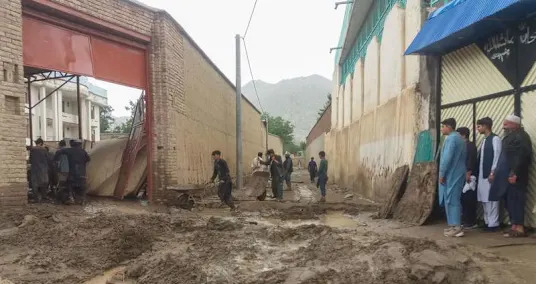
At least 61 people have been killed and 116 injured across Afghanistan since March 26 due to heavy rainfall, floods, landslides and lightning strikes, the Afghan government said on Saturday.
At least four people were still missing after floods affected thousands of families and damaged 2,448 houses, Afghan government spokesman Zabihullah Mujahid said in a post on X.
In addition, thousands of hectares of cropland was also destroyed, posing serious risks to rural communities who rely on agriculture for their livelihoods.
Deadly flooding has struck Afghanistan repeatedly in recent years, causing significant loss of life, injuries and widespread damage to homes, infrastructure and agricultural land.
Extreme weather events such as flash floods and droughts are increasing in Afghanistan, which experts link to the climate crisis.
Despite having a negligible carbon footprint, the country ranks among the most climate-affected nations and remains ill-prepared to cope after decades of conflict, poor infrastructure and a struggling economy, compounded by recent earthquakes and severe flooding.
LATEST POSTS



 Fuel Price Spike Drives Surge in Used EV Sales in Europe
- Satellite observations offer insight into a tsunami's early stages
- Washington state experiences historic flooding as Skagit River hits record high level. See flooding maps, highway closures and forecasts.
- Everything you should know before booking a trip to Spain
- Car Investigation: A Survey of \Past the Outside\ Car
- Scientists may be overestimating the amount of microplastics in the environment – and the culprit is lab gloves
- Elite Execution Gaming PCs for Gamers
- Limited Rain Chances in Brazil Boost Coffee Prices
- Fundamental Archives for Beginning Your Business